Best Credit Builder Loans in Canada 2026: Honest Comparison
Compared the real credit builder loans in Canada for 2026: Refresh, Spring, KOHO. Real fees, payouts, who they actually help, and who should just skip them.

Product Manager in Fintech · Montreal, Canada
Ready to start recovering? Our free quiz creates a personalized plan for your exact situation.
Take the Free Quiz →A credit builder loan is a strange product the first time you see it. You borrow money you don’t get to spend. The lender locks it in an account, you make monthly payments, and at the end you get the cash back, minus interest and fees. The whole point is the paper trail: 12 months of on-time payments reported to Equifax Canada and TransUnion.
That’s it. You’re paying to prove you can pay.
For some people in Canada that trade is worth it. For a lot of others, it’s money you didn’t need to spend. I work in a Canadian fintech company, and I see both groups every week. Let me save you the research and walk through which credit builder loans are actually worth it in 2026, and which ones you should walk past.
What Is a Credit Builder Loan in Canada?
A credit builder loan in Canada is an installment loan where the lender holds the borrowed amount in a locked savings account until you finish paying. You make fixed monthly payments, typically $25 to $150, and each one gets reported to Equifax and TransUnion. When the term ends, you receive the funds back, often minus interest and an admin fee.
The key word is installment. Your credit score in Canada is built from a few different account types, and most people rebuilding only have revolving credit: a secured card, maybe a KOHO line. Adding an installment loan diversifies your credit mix, which is roughly 10% of the score formula both bureaus use.
So a credit builder loan does two jobs at once: it logs on-time payment history (the biggest single factor, around 35%) and it adds an account type you probably don’t have yet.

Who Should Actually Use One?
Credit builder loans help most when you have thin or damaged credit AND no installment history. If your score sits below 600, you’ve been declined for a regular secured card, or you’re rebuilding after a consumer proposal or bankruptcy, the structured payments give you something positive to report. If you already have a secured card in good standing, the gains shrink fast.
Here’s the honest split. You’re a good fit if:
- You have no credit history at all (new immigrant, young adult, recently divorced and rebuilding solo)
- You’re rebuilding after bankruptcy or a consumer proposal and need fresh positive accounts
- You can’t get approved for a secured card right now
- You want an installment account to round out a file that’s all credit cards
You should probably skip it if:
- You already have a secured card reporting on time
- You’re carrying credit card debt at 19.99%. Pay that down first, it moves your score more
- You have $300 sitting in savings and just need a $75 secured card deposit instead
By the way, I see the rebuilding-after-bankruptcy group constantly at work. Once someone goes through insolvency in Canada, the big banks turn their backs almost overnight. No traditional cards, no line of credit. People get pushed toward payday lenders charging brutal APR, and the cycle gets worse. A credit builder loan is one of the few legitimate, low-cost tools that group can actually qualify for. That’s where these products earn their keep.
The Main Credit Builder Loans in Canada (2026)
As of May 2026, the Canadian credit builder market is smaller than the American one: there’s no Self or Kikoff up here. The real options come down to a handful of names, and a couple of them are technically the same engine wearing different logos.
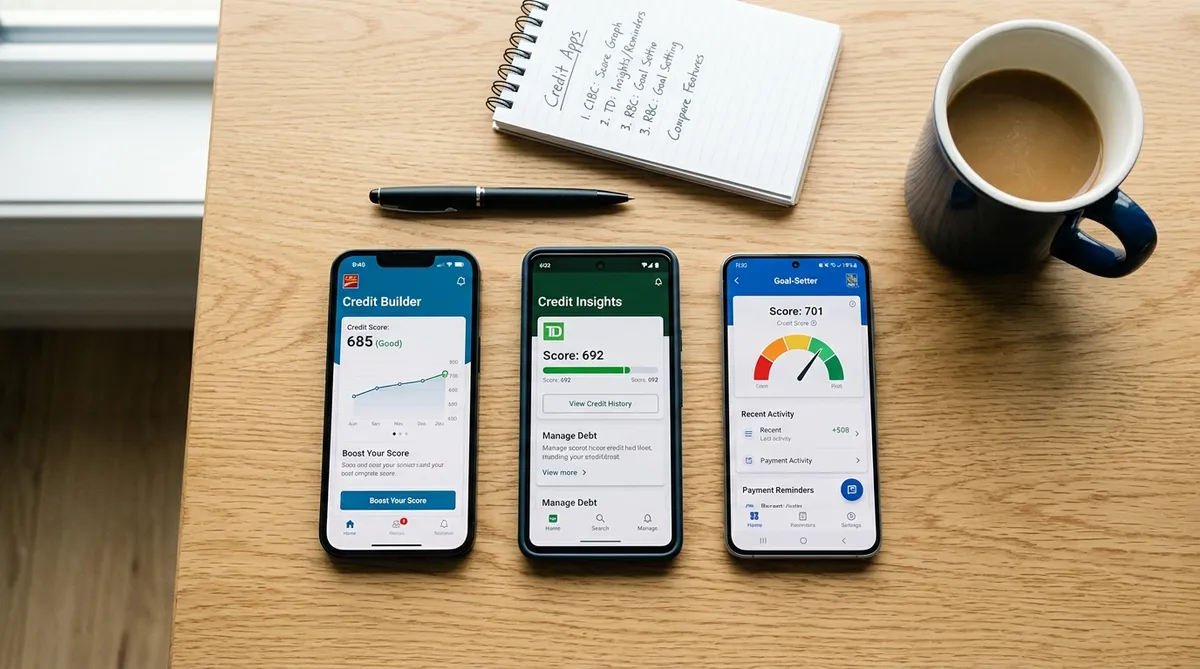
Spring Financial (The Foundation)
Spring Financial runs a program called The Foundation, which is the most widely marketed credit builder loan in Canada right now. You make small monthly payments for a 12-month term, payments report to both bureaus, and you collect the savings at the end. No credit check to qualify, which matters if your file is already bruised.
The catch worth knowing: Spring also cross-sells larger personal loans, so expect follow-up offers. The credit builder piece itself is straightforward, but read the agreement so you know exactly how much of your money comes back versus how much is interest and admin fees.
Refresh Financial
Refresh Financial was the original Canadian credit builder loan brand, and it’s now part of the Spring Financial family. The product still shows up under the Refresh name in places, and it powers some partner offers too. Same basic mechanics: locked savings, fixed payments, bureau reporting on a 12 to 36 month term.
If you want the full breakdown of fees and the real-world score lift, I went deep on it in our Refresh Financial review for 2026. Short version: it works, but the all-in cost is higher than people expect once you add the interest and the admin fee together.
KOHO Credit Building
KOHO isn’t a loan. It’s a subscription that reports your activity as a tradeline. I’m including it because most people comparing “credit builders” in Canada are really choosing between an installment loan and KOHO, not between two loans. As of May 2026, KOHO Credit Building runs $7/month on the Essential tier and $10/month on the Extra tier. No deposit, no lump sum locked away, cancel anytime.
The difference matters. A loan builds installment history; KOHO reports a recurring payment line. If your credit file is all cards already, the loan adds more variety. If you just need a cheap, low-commitment way to show on-time payments, KOHO is lighter on the wallet. I broke down the month-by-month numbers in our KOHO Credit Builder review, and the head-to-head lives in Refresh Financial vs KOHO.
What Do Credit Builder Loans Actually Cost?
The advertised payment is not the cost. The cost is the interest plus any setup or admin fee: the gap between what you pay in and what you get back at the end. On a typical 12-month Canadian credit builder loan, that gap commonly lands somewhere in the $100 to $400 range depending on the provider and amount.
Compare that to a secured card. A Capital One Guaranteed Secured Mastercard takes a $75 minimum deposit and charges a $59 annual fee (verified May 2026). A Neo Financial Secured Mastercard asks for as little as a $50 deposit and $0 annual fee. With a secured card, your deposit comes back in full. You only pay the annual fee, if there is one.
So the math is simple. A secured card is usually cheaper and you get a usable spending limit. A credit builder loan’s only real advantage is that it adds installment history and forces savings you can’t touch. If neither of those applies to you, the loan is the more expensive choice for the same score bump.
Always run the total cost, not the monthly. I learned the hard way that small recurring numbers add up. I still flinch a little at how much interest quietly stacks up over a year on anything I don’t pay off in full. Use our Debt Payoff Calculator if you want to see how a few hundred dollars of interest compares to just paying down an existing balance instead.
How Much Will It Move Your Score?
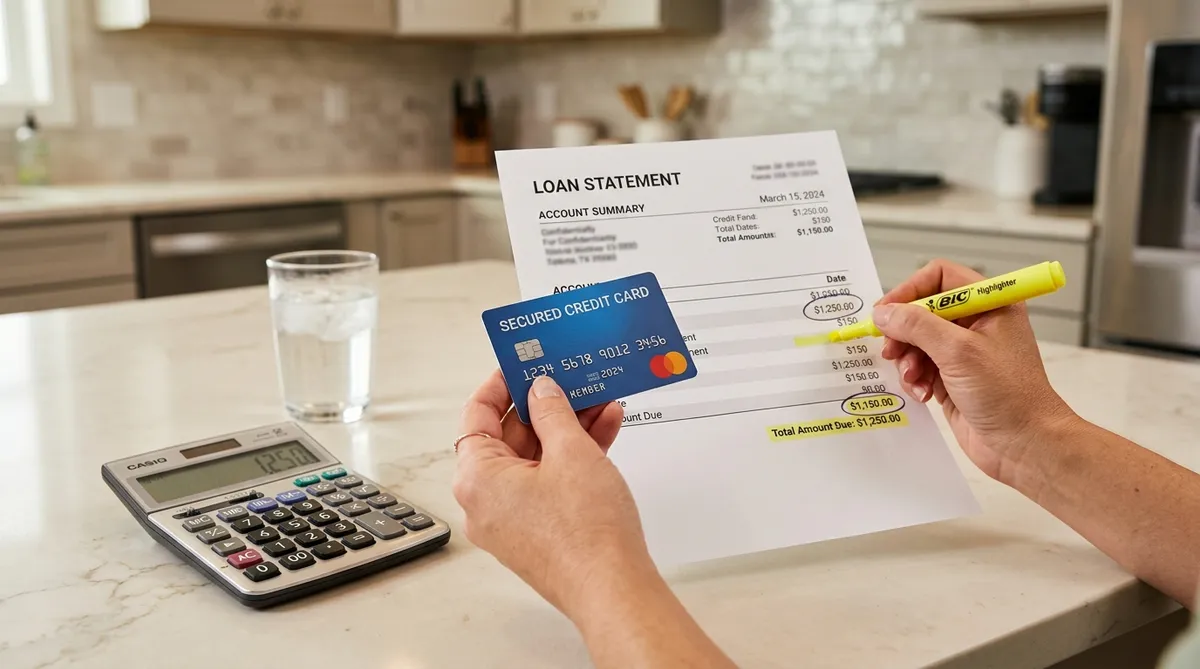
A credit builder loan typically adds 30 to 70 points over 12 months for someone with a thin or low file, but the exact lift depends on what else is on your report. The biggest gains go to people with little to no credit history. If you already have an active card reporting on time, the marginal benefit drops sharply.
Two things kill the result faster than anything:
- A single missed payment. One late payment on a builder loan reports to Equifax and gets weighted heavily. It can wipe out months of progress. Set up autopay the day you open it.
- Closing it early. Cancelling mid-term can leave a short, incomplete account that does little for you and sometimes triggers fees.
I’ll be straight with you: I never used a credit builder loan myself. When I landed in Canada my score started around 750, dropped into the 650s after I bought my house and leaned on credit cards and applied for a line of credit, then climbed back to 820 by February 2026 — and the thing that pulled it up was the mortgage, an installment account I already had. That’s the same job a credit builder loan does for someone who doesn’t have a mortgage or car loan. If you’ve got no installment account at all, you have to manufacture one. I just happened to get mine the expensive way (a house).
The other lesson from my own file: hard inquiries hurt more than people think. I once tried to finance a fridge through a retailer, waited three weeks, got declined — and watched my score drop 20 points from the inquiry alone. The good news with most Canadian credit builder loans is they skip the hard check, so you can add one without that ding.
So Which One Should You Pick?
Match the product to your situation, not the marketing. If you have zero or damaged credit and no installment account, a credit builder loan from Spring or Refresh adds the history you’re missing. If your file already has a card and you just want cheap on-time reporting, KOHO at $7/month beats a loan. If you have even $75 in savings, a secured card is usually the better first move.
Quick decision guide for 2026:
- No credit at all, no card → secured card first ($50–$75 deposit), then add a builder loan for installment history
- Rebuilding after bankruptcy / consumer proposal → credit builder loan (no hard check, qualifies when cards won’t)
- Already have a secured card → KOHO or nothing, don’t double-pay
- Have savings and just need a score → secured card, get your deposit back
Whatever you choose, check your real numbers before you sign anything. Most of the mistakes I see at work come from people picking a product that didn’t fit their file: paying for installment history they already had, or grabbing a loan when a $50 secured card would’ve done the same job for less.
Not sure where you land? Take our 90-second Credit Recovery Quiz. It asks about your current accounts, your score range, and your goal, then tells you whether a credit builder loan, a secured card, or KOHO actually fits your situation in Canada. No signup, no sales pitch. Just the honest next step.
Prices verified as of May 2026: KOHO ($7/$10 per month), Capital One Guaranteed Secured ($75 deposit, $59 annual fee), Neo Secured ($50 deposit, $0 annual fee). Credit builder loan costs vary; confirm the total interest and fees directly with the provider before signing. Sources: KOHO, Equifax Canada.
Get Your Personalized Recovery Plan
Answer 6 quick questions and get a step-by-step plan tailored to your situation.
Take the Free Quiz Product manager in fintech, immigrant to Canada, and founder of Credit Score Hero. I moved from Kyrgyzstan to Montreal in 2022 and built this site to help Canadians navigate the credit system with free tools and honest, Canada-specific advice.