Consumer Proposal vs Bankruptcy in Canada: Credit Score Impact Compared
Consumer proposal vs bankruptcy in Canada — how each affects your credit score, how long it stays on Equifax and TransUnion, and which lets you recover faster.

Product Manager in Fintech · Montreal, Canada
Ready to start recovering? Our free quiz creates a personalized plan for your exact situation.
Take the Free Quiz →Most guides you’ll find on this topic are written by Americans talking about Chapter 7 and Chapter 13. Neither of those exists in Canada. If you’re weighing a consumer proposal against bankruptcy here and wondering what happens to your credit score, the rules are different — the credit impact is different, the reporting timelines are different, and the path back is different.
I work in product management at a financial company in Canada, and I’ve watched this choice play out for a lot of people. The credit math generally favors one option clearly. Here’s what actually matters.

What’s the Difference Between a Consumer Proposal and Bankruptcy in Canada?
A consumer proposal is a legal deal. You negotiate — through a Licensed Insolvency Trustee (LIT) — to repay a portion of your unsecured debt over up to 5 years. Usually 20 to 70 cents on the dollar. Creditors vote; if the majority (by dollar value) agree, everyone is bound. You keep your assets.
Bankruptcy is a legal process where most unsecured debts are discharged, but you surrender non-exempt assets to the LIT, who distributes them to creditors. It moves faster — a standard first-time bankruptcy gets discharged in 9 months. But “faster” is not the same as “better for your credit.”
Both are governed by Canada’s Bankruptcy and Insolvency Act, overseen by the Office of the Superintendent of Bankruptcy (OSB). Both require a Licensed Insolvency Trustee — not a debt consultant, not a credit counselor. An LIT is the only person in Canada legally allowed to file either option.
One practical note: consumer proposals have a $250,000 limit on unsecured debt. Bankruptcy has no ceiling.
How Does Each Option Hit Your Credit Score?
A consumer proposal results in an R7 rating on every account included in the filing. Bankruptcy results in an R9 rating — the worst on Canada’s credit rating scale, which runs from R1 (pays as agreed) to R9 (bad debt, bankruptcy). Both ratings appear beside each individual account, so if you had 5 accounts in the filing, all 5 show the notation.
Score drop at filing:
- Consumer proposal: typically 100–150 points
- Bankruptcy: typically 150–200+ points
Someone at 680 who files a consumer proposal likely lands around 530–570. The same person filing bankruptcy might end up at 430–480.
One thing that surprises most people: the drop happens at filing, not at discharge or completion. Those first months after filing are the worst point on your score, regardless of which path you chose.
Both options also freeze interest immediately. The day you file either one in Canada, interest stops accumulating on included unsecured debts. For anyone carrying $30,000+ in credit card debt at 20–23% APR, that alone is significant.
How Long Does Each Stay on Your Credit Report in Canada?
A consumer proposal stays on Equifax Canada for 3 years after completion (or 6 years from the filing date, whichever comes first). TransUnion Canada removes it 3 years after completion. Bankruptcy stays on Equifax for 6 years after discharge — and on TransUnion for 6 to 7 years, depending on your province.
Consumer proposal timeline:
- Equifax Canada: 3 years post-completion, OR 6 years from filing date — whichever is earlier
- TransUnion Canada: 3 years after the completion date
File in March 2026, complete in March 2030, and both bureaus are clear by March 2033. Roughly 7 years total from filing to clean report.
First-time bankruptcy timeline:
- Equifax Canada: 6 years after your discharge date
- TransUnion Canada: 6–7 years post-discharge (varies by province)
Standard discharge happens 9 months after filing. So: file March 2026, discharge December 2026, Equifax clear by December 2032. TransUnion could hold it until late 2033 in some provinces. That’s 7.5 to 8+ years total from filing.
Second bankruptcy: 14 years after discharge on both bureaus. A completely different conversation.
For the full province-by-province breakdown of exactly how long bankruptcy notations last, see How Long Bankruptcy Stays on Credit Reports in Canada.
Can You Rebuild Credit Faster After a Consumer Proposal?
Yes — and the reason matters. During an active consumer proposal, you can apply for a secured credit card and start building positive payment history immediately. During active bankruptcy, most lenders won’t touch you until after discharge. That 9-month gap compounds.
I’ve seen this pattern repeatedly through my work: someone who filed a consumer proposal in 2023 and completed it in 2027 might have 4 years of clean payment history sitting on their file by the time the R7 notation drops off in 2030. By contrast, someone who filed bankruptcy in 2023, got discharged in late 2023, and started rebuilding in 2024 is still fighting an R9 notation on their Equifax report through 2029 — the entire time they’re trying to show positive behavior.
Products that approve applicants in an active consumer proposal (as of March 2026):
- Neo Financial Secured Mastercard — $0 annual fee, $50 minimum deposit, reports to Equifax
- Capital One Guaranteed Secured Mastercard — $59 annual fee, $75 minimum deposit, reports to both bureaus
- KOHO Credit Builder — $7/month (Essential) or $10/month (Extra), reports to Equifax monthly
None of those will approve you during active bankruptcy. You have to wait for discharge first.
For the full list of cards that actually accept people post-insolvency, see Best Secured Credit Cards for Bad Credit in Canada 2026.
What Do Real Credit Recovery Cases Look Like in Canada?
The 30–40% of Canadians with credit scores below 600 isn’t a made-up statistic — I see the real numbers through my work, and it genuinely surprised me when I first encountered them. Canada presents itself as a wealthy country. The reality is that a significant chunk of the population is living close to the edge, and one missed paycheque or one unexpected expense can start a spiral.
What I consistently see in the aftermath of bankruptcy is a second trap. The big banks — TD, RBC, Scotiabank, BMO — screen for R9 notations and decline most applicants outright. So people who just went through one of the most stressful financial experiences of their lives get pushed toward lenders charging 29.99% APR or higher. Or worse, payday loan companies where the effective annual rate can reach 391% in Ontario. The system that was supposed to give them a fresh start routes them straight toward another debt cycle.
A consumer proposal doesn’t trigger that same reaction from underwriters. The R7 notation still shows — it still hurts — but it signals “I negotiated a repayment and honored it” rather than “I walked away from everything.” That distinction matters to lenders more than the credit score number itself, at least in the early months of recovery.
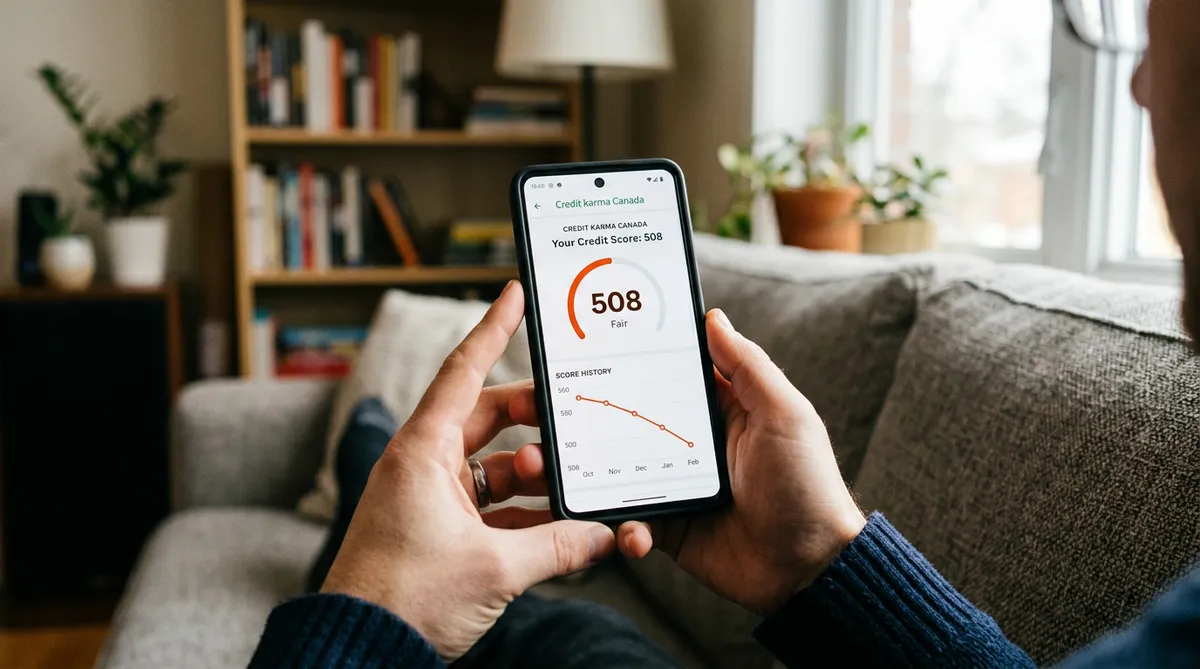
One thing I’d add from monitoring my own finances: use Credit Karma Canada consistently, not just at filing. It pulls your TransUnion score for free and sends alerts when new accounts appear. I caught a suspicious SIM card charge that way — someone had signed me up for a “free” plan that immediately began billing, and Credit Karma flagged the new account before it went to collections. That kind of early detection matters twice as much when your score is already fragile.

How Do the Recovery Timelines Compare Side by Side?
A consumer proposal generally takes 7–8 years from filing to a clean credit report, while first-time bankruptcy takes 7–9 years. The total timelines look deceptively similar on paper, but the critical difference is what happens during those years — and whether you can rebuild while the process is still active. Here’s the breakdown as of March 2026:
| Consumer Proposal | Bankruptcy (1st time) | |
|---|---|---|
| Credit notation | R7 | R9 |
| Typical score drop at filing | 100–150 pts | 150–200+ pts |
| Can apply for secured credit during? | Yes | No (until discharge) |
| Equifax removal | 3 yrs after completion | 6 yrs after discharge |
| TransUnion removal | 3 yrs after completion | 6–7 yrs after discharge |
| Rough total timeline (filing → clean) | 7–8 years | 7–9 years |
| Keep assets? | Yes | No (non-exempt assets) |
| Max unsecured debt | $250,000 | No limit |
The total timeline looks similar on paper. The difference is what happens during those years. With a consumer proposal, you’re rebuilding the whole time. With bankruptcy, you’re waiting, then rebuilding while an R9 still sits on your report.
Which Option Is Actually Better for Your Credit?
For credit score recovery specifically, a consumer proposal wins. Less severe initial notation, faster removal from Equifax and TransUnion, and the ability to start building positive history while the process is still active.
But “better for credit” isn’t always “better for your situation.” A consumer proposal requires sustained monthly payments for up to 5 years. If your debt is so large that no realistic monthly payment could satisfy creditors within that window, or if your income is too unstable to commit to a 5-year plan, bankruptcy might be the only real option.
The honest framework:
Consumer proposal likely fits if: you have stable income, own assets worth protecting, and your unsecured debt is under $250,000.
Bankruptcy likely fits if: your income can’t sustain proposal payments, you have minimal assets, or you need the fastest possible legal resolution to stop wage garnishment immediately.
Both processes require a Licensed Insolvency Trustee. Initial consultations are free. The Office of the Superintendent of Bankruptcy Canada maintains a public LIT directory.
One mistake I see constantly: people make this decision without tracking their credit before or after. If you’re not monitoring both Equifax and TransUnion regularly, you won’t know if the notations were applied correctly, you won’t catch errors, and you won’t see when you’ve crossed the threshold to qualify for better products. Borrowell tracks Equifax for free; Credit Karma Canada tracks TransUnion for free. Use both.
For a month-by-month recovery plan once your process is underway, Rebuild Credit After Bankruptcy in Canada: Monthly Plan covers exactly what to do in months 1 through 24 post-discharge or post-completion.
Not sure which option applies to your debt situation — or where your score actually stands right now? Take the 90-second credit recovery quiz. It gives you a personalized recommendation based on your current score, debt load, and province, including which credit products you can access right now.
Get Your Personalized Recovery Plan
Answer 6 quick questions and get a step-by-step plan tailored to your situation.
Take the Free Quiz Product manager in fintech, immigrant to Canada, and founder of Credit Score Hero. I moved from Kyrgyzstan to Montreal in 2022 and built this site to help Canadians navigate the credit system with free tools and honest, Canada-specific advice.
Related Recovery Guides
After Divorce
How to recover your credit after separation
Student Debt Recovery
Guide for Canadians with student debt problems
After Payday Loans
Rebuilding credit after the payday loan trap
Best Secured Cards 2026
Compare secured credit cards for rebuilding in Canada
Renting with Bad Credit (Ontario)
Your rights as a renter under the Human Rights Code