Best Secured Credit Cards for Bad Credit in Canada 2026
Compare the best secured credit cards for bad credit in Canada 2026. Real costs, approval odds, and which one actually rebuilds your score fastest.

Product Manager in Fintech · Montreal, Canada
Ready to start recovering? Our free quiz creates a personalized plan for your exact situation.
Take the Free Quiz →If your credit score is below 600 in Canada, a secured credit card is usually the fastest legitimate path back. Not the only path — but the one that works for most people, most of the time. The catch is that not all secured cards are built the same, and the wrong choice can cost you $200+ in fees annually while doing almost nothing for your score.
Here’s what I’ve learned from working in financial services and watching how real Canadians — not the ones in bank brochures — actually rebuild their credit.

What Is a Secured Credit Card and How Does It Help Bad Credit in Canada?
A secured credit card requires you to put down a cash deposit — usually $75 to $500 — which becomes your credit limit. The card then reports your payment activity to Equifax Canada and/or TransUnion Canada each month. Pay on time, keep your utilization below 30%, and your score climbs. That’s the whole mechanism.
The reason this works when nothing else will: you’re not asking a bank to trust you. You’re putting up the money yourself. The bank takes zero risk, so approvals are almost guaranteed even with a score in the 500s, a consumer proposal, or a recent bankruptcy discharge.
One thing most guides miss: the reporting matters more than the card. A secured card that only reports to one bureau builds your score half as fast as one that reports to both Equifax and TransUnion. Always confirm this before applying.
Best Secured Credit Cards in Canada for 2026: Quick Comparison
Before going into detail on each card, here’s the honest summary. As of March 2026, these are the four products I’d actually recommend to someone rebuilding credit in Canada:
| Card | Annual Fee | Deposit | Reports To | Best For |
|---|---|---|---|---|
| Capital One Guaranteed Secured Mastercard | $59/yr | $75–$300 | Equifax + TransUnion | Near-guaranteed approval |
| Neo Financial Secured Mastercard | $0/yr | $50–$5,000 | Equifax + TransUnion | No annual fee |
| Home Trust Secured Visa | $59/yr (or $0 with 19.99% rate) | $500–$10,000 | Equifax + TransUnion | Higher limits needed |
| KOHO Credit Builder | $7–$10/mo | None | Equifax | Bankruptcy / consumer proposal |
These aren’t the only secured cards in Canada. But they’re the ones with the clearest terms, dual-bureau reporting, and a track record of actually moving scores.
Capital One Guaranteed Secured Mastercard: The Workhorse
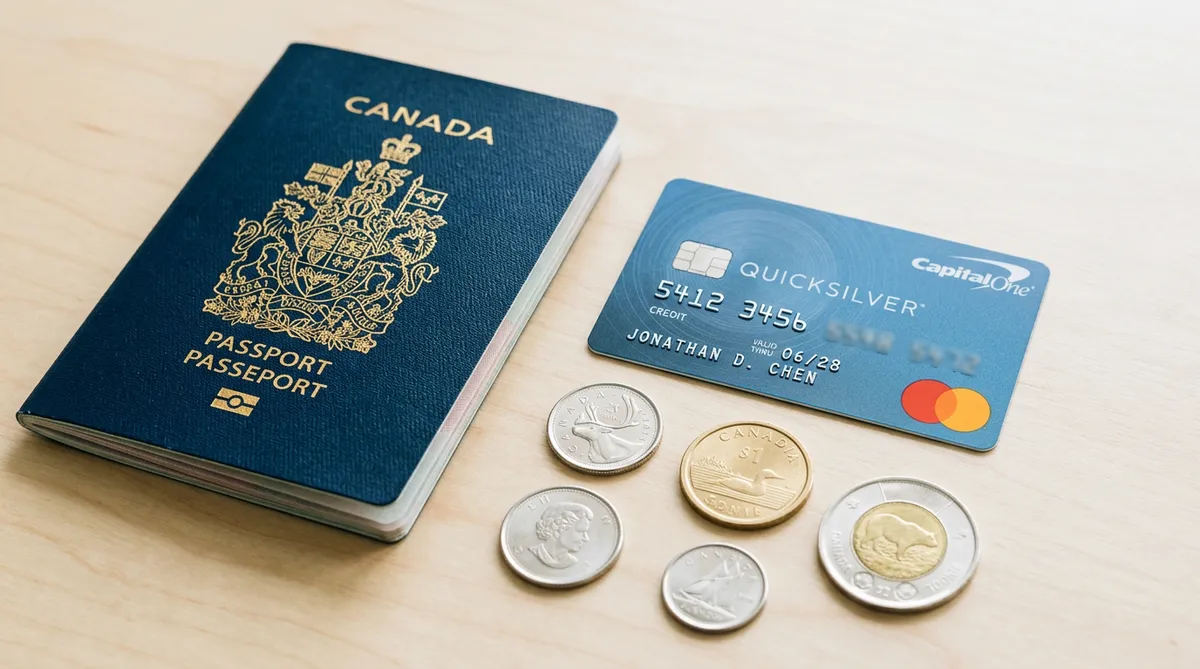
The Capital One Guaranteed Secured Mastercard is named accurately. As long as you’re a Canadian resident, at least the age of majority in your province, and not currently in active bankruptcy proceedings, Capital One will approve you. Period.
Cost: $59 annual fee, plus a $75 minimum deposit (which becomes your credit limit). You can add more deposit to increase your limit up to $300.
APR: 19.8% for purchases, 21.9% for cash advances. Don’t carry a balance.
Reports to: Both Equifax Canada and TransUnion Canada. This matters.
The card itself is basic — no rewards, no perks. But it works. I’ve seen people go from a score of 510 with a consumer proposal to 650+ within 12-18 months using only this card plus consistent on-time payments. The $59 fee stings but it’s predictable, and the $75 deposit is the lowest requirement of any legitimate secured card in Canada.
One honest downside: Capital One’s credit limit increase process is opaque. Some people get auto-upgrades after 12-18 months. Others have to call and ask. A higher limit helps your utilization ratio, so this matters for your score trajectory.
Neo Financial Secured Mastercard: No Annual Fee, Real Results
Neo Financial launched in Canada in 2019 and their secured card has become genuinely competitive. The no annual fee structure makes it the cheapest entry point if you’re disciplined.
Cost: $0 annual fee. Your deposit (minimum $50, maximum $5,000) is your credit limit.
APR: 19.99% — similar to Capital One.
Reports to: Both bureaus.
Cashback: 0.5% on regular purchases, up to 5% at Neo’s partner merchants (grocery stores, gas stations, etc. — the list is decent).
The Neo card is a good choice if you’re starting from scratch or rebuilding after a consumer proposal and you’re sensitive to fees. The lower deposit minimum ($50 vs $75) also helps if you’re cash-strapped.
That said, Neo is still a relatively newer lender compared to Capital One. Their customer service has improved since 2023 but isn’t as consistent. And the 5% cashback is real but only applies at partner merchants — don’t let that number anchor your expectations for typical spending.
If you’re choosing between Neo and Capital One: Neo wins on cost, Capital One wins on brand recognition (which can occasionally matter for secondary banking relationships). For pure credit building, they’re essentially equal.
Home Trust Secured Visa: When You Need a Higher Limit
Home Trust’s secured Visa is the go-to for people who need a higher credit limit to keep utilization low on existing debt, or who want to accelerate their score growth by having more available credit.
Cost: Two versions:
- $59/year with a 14.9% purchase rate (good if you occasionally carry a balance)
- $0/year with a 19.99% purchase rate (standard)
Deposit: $500 minimum, $10,000 maximum.
Reports to: Both bureaus.
The $500 minimum deposit is a real barrier for people who are cash-strapped during credit recovery. But if you can put down $1,000-$2,000, your available credit is high enough that even modest spending keeps you under the 30% utilization threshold without obsessive monitoring.
One thing most people don’t know: Home Trust is one of the few secured card issuers in Canada that regularly converts accounts to unsecured after 12-18 months of good behavior — and returns your deposit with interest. Capital One sometimes does this too but less consistently.
KOHO Credit Builder: The Alternative for Bankruptcies and Consumer Proposals
KOHO Credit Builder isn’t a traditional secured card. It’s a $7/month (or $10/month for the “Extra” tier) subscription that reports a fixed monthly payment to Equifax as a credit-building installment account.
How it works: KOHO holds a small amount (usually $60-$300, depending on your plan) in a savings account. They report your monthly “payments” to Equifax. You get the money back when you cancel.
Why it matters for bad credit recovery: Some people with active consumer proposals or recent bankruptcy discharges can’t get approved for even a secured card from Capital One. KOHO’s approval process is significantly more forgiving. In 2025, they updated their eligibility to explicitly welcome people in consumer proposals.
The honest limitation: KOHO only reports to Equifax, not TransUnion. So it builds half your credit profile. And at $7-$10/month, over 18 months that’s $126-$180 — comparable to a secured card’s annual fee, but without the flexible credit limit or payment flexibility.
My recommendation: use KOHO Credit Builder as a supplement to a secured card, not a replacement. If you can only do one thing, a secured card is more versatile. If you’re specifically blocked from secured cards due to recent insolvency, KOHO is a legitimate bridge.
You can read more about KOHO specifically in the KOHO Credit Builder review.
What About Secured Cards from the Big Banks?
BMO, TD, RBC, Scotiabank, and CIBC all offer secured credit cards. My honest take: for most people rebuilding credit, the big bank secured cards are not the best starting point.
The reasons:
-
Approval is not guaranteed. Despite taking your deposit, big banks can and do decline applications based on credit history, income, and internal risk models. A score of 520 after a consumer proposal might not clear their bar.
-
Higher deposit minimums. Most big bank secured cards require $500-$2,000 minimum deposits.
-
Limited transparency on upgrade timeline. Big banks rarely communicate clearly when they’ll convert your secured account to unsecured or return your deposit.
That said — if you already bank with one of the Big Six, have an existing relationship, and your score is in the 580-620 range, it’s worth asking. The internal relationship can sometimes override the algorithm.
I bank with Scotiabank and have a credit line there now. But when I first needed to build credit in Canada after arriving from Kyrgyzstan in 2022, the secured card that worked for me — and that I’d still recommend — wasn’t from a big bank.
My Experience: What Actually Moved My Score
When I arrived in Montreal in 2022, I had a decent credit history back home but it meant nothing here. Zero Canadian credit. Not bad — invisible. Landlords in Montreal looked at my rental application like I was making something up when I explained my situation.
My starting move was a Capital One Guaranteed Secured Mastercard with the $75 deposit. I set my phone bill on autopay through it and paid the full balance every single month — no exceptions. Within six months, my Borrowell score hit 680. Not impressive by Canadian standards, but enough. I used it to get my first apartment without a co-signer.
What surprised me at the time: the speed of the score movement when you keep utilization under 30%. I was spending maybe $120/month on the card (out of a $300 limit), which put me at 40% utilization. Once I put the deposit up to get a $300 limit and started keeping my balance under $90, I saw a noticeable jump in the next reporting cycle.
My biggest mistake in those first months wasn’t the card choices — it was not understanding hard inquiries. When I was buying appliances after getting my first place, I applied for an in-store financing offer at a furniture store. They ran a hard inquiry. The application got declined, and my score dropped 20 points in one shot. It took four months to recover those points. Understanding how hard inquiries work in Canada before you start applying for anything is worth the hour of reading.
What Secured Card Strategy Actually Works?
The mechanics aren’t complicated but they’re specific:
Step 1 — Apply for one card only. Applying for multiple secured cards at once means multiple hard inquiries and multiple new accounts — both hurt your score temporarily. Pick one, wait 6 months, then reassess.
Step 2 — Keep utilization under 30%. If your credit limit is $300, keep your balance below $90 when the statement closes. Under 10% is even better. This single factor accounts for about 30% of your credit score calculation in Canada.
Step 3 — Pay the full balance every month. Not the minimum — the full amount. Carrying a balance on a secured card at 19.8-20% APR is expensive, and you don’t need to carry a balance to build credit. The reporting is based on whether you pay on time, not whether you pay interest.
Step 4 — Don’t close the account prematurely. Length of credit history matters. A 2-year-old account is more valuable than you think. Unless the annual fee stops being worth it, keep the account open.
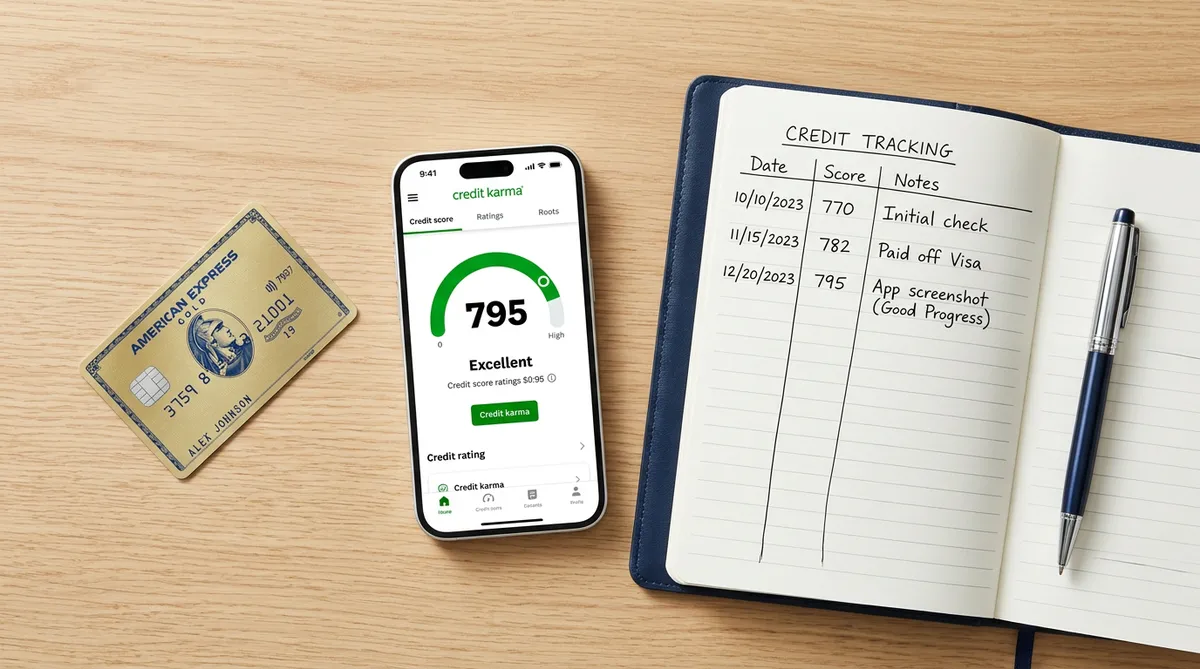
Step 5 — Check both bureaus, not just one. Borrowell shows your Equifax score for free. Credit Karma Canada shows your TransUnion score. Check both every month. I’ve seen cases where someone had a 700 on one bureau and a 580 on the other because a collections account appeared on one but not the other. They’re independent systems.
Which Secured Credit Card Should You Actually Get?
Here’s how I’d decide, as of March 2026:
- Score below 550 or recent consumer proposal/bankruptcy discharge: Start with Capital One Guaranteed Secured. Add KOHO Credit Builder if you want to hit both bureaus faster.
- Score 550-620, want no annual fee: Neo Financial Secured. Apply there first.
- Need a higher credit limit (above $500): Home Trust Secured Visa.
- Currently in bankruptcy proceedings (not discharged): None of the above will work. Wait for discharge first, then Capital One.
- Already have one secured card for 12+ months: Start looking at whether you qualify for a low-interest unsecured card. Use the Recovery Quiz to get a personalized view of your next step.
The honest truth is that no secured card fixes bad credit fast. The fastest realistic timeline for a meaningful improvement is 9-12 months of consistent behavior. Anyone promising 6 months or less is either selling something or measuring from an unusually low starting point.
But compared to the alternatives — credit repair companies charging $1,000+ for services you can do yourself, or predatory high-interest cards with 29.99% rates — a $59/year secured card with dual bureau reporting is a genuinely useful tool.
Use the Credit Score Calculator to see what your current score is actually costing you in higher interest rates — the number is usually surprising enough to make a $59 annual fee look like a very reasonable investment.
Related: How Long Does Bankruptcy Stay on Your Credit Report in Canada? | Borrowell vs Credit Karma Canada: Which Free Credit Monitoring Is Better?
Get Your Personalized Recovery Plan
Answer 6 quick questions and get a step-by-step plan tailored to your situation.
Take the Free Quiz Product manager in fintech, immigrant to Canada, and founder of Credit Score Hero. I moved from Kyrgyzstan to Montreal in 2022 and built this site to help Canadians navigate the credit system with free tools and honest, Canada-specific advice.