Debt Consolidation in Canada: Does It Actually Help Your Credit?
Debt consolidation in Canada can drop your score 20-40 points short-term but build it 80+ points within a year if done right. Honest breakdown.

Product Manager in Fintech · Montreal, Canada
Ready to start recovering? Our free quiz creates a personalized plan for your exact situation.
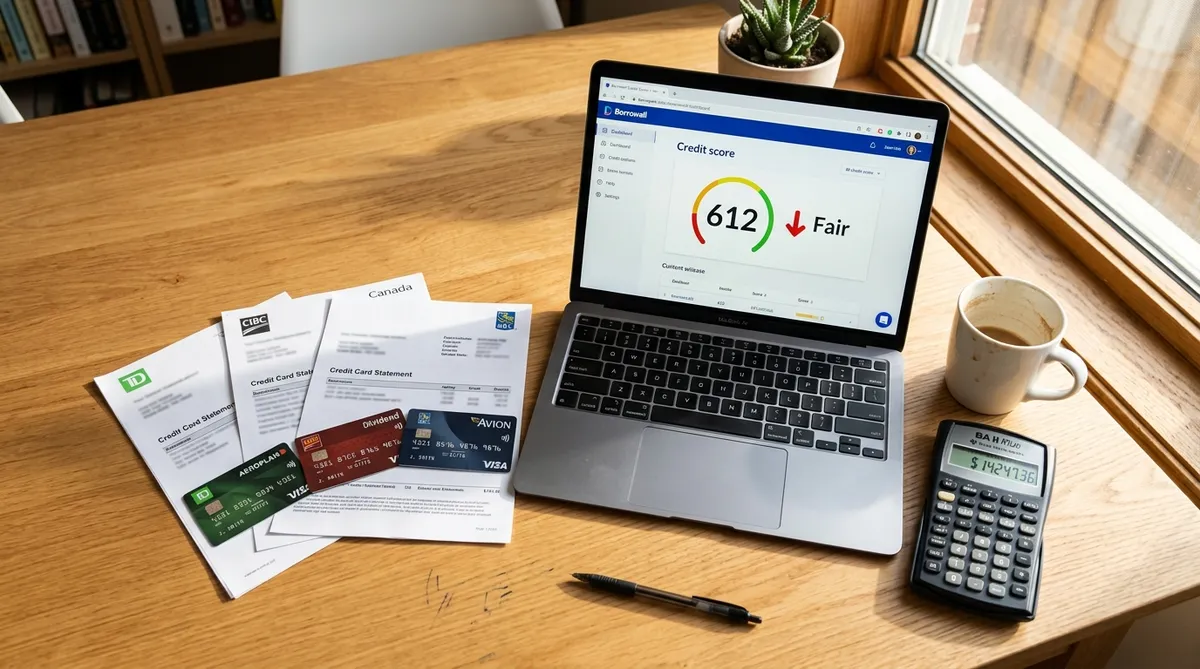
Take the Free Quiz →A friend asked me last month if she should take a $14,000 consolidation loan from her credit union to pay off three maxed-out cards. Her Borrowell score was 612. She was scared the loan application would tank it further. The honest answer is: yes, it will dip. Probably 20 to 30 points in the first month. But by month nine, if she actually pays it down on schedule, she’ll be sitting around 700.
That’s the part most articles about debt consolidation in Canada skip. They either promise a magical credit boost or warn you off entirely. Neither is true. The score impact depends on what kind of consolidation you do, how you handle the old accounts, and whether you’ve fixed the spending that caused the debt in the first place.
I work in fintech in Canada and I’ve watched thousands of these decisions play out. Let me walk you through what actually happens to your Equifax and TransUnion files when you consolidate, and which option is least likely to backfire.
Does debt consolidation hurt or help your credit score in Canada?
Debt consolidation usually drops your score 15 to 40 points in the first 30 to 60 days because of the hard inquiry and new account opening. After that, if you make on-time payments and your overall credit utilization drops below 30%, your score typically rises 50 to 100 points within 6 to 12 months. The damage is short. Recovery is real and measurable.
Here’s why the dip happens. When you apply for a consolidation loan or balance transfer card, the lender pulls your credit report. That’s a hard inquiry, which costs about 5 points on its own. Then a brand-new account opens, which lowers your average account age — and account age is roughly 15% of your score in Canada.
But here’s the upside. If you take that consolidation loan and immediately pay off three credit cards that were sitting at 85% utilization, your reported utilization drops to near zero on the cards. Utilization is the heaviest short-term factor in your score. I’ve seen clients gain 60 to 90 points in a single reporting cycle just from that utilization shift. The loan payments themselves don’t count toward utilization the same way revolving credit does. Installment debt is treated more gently.
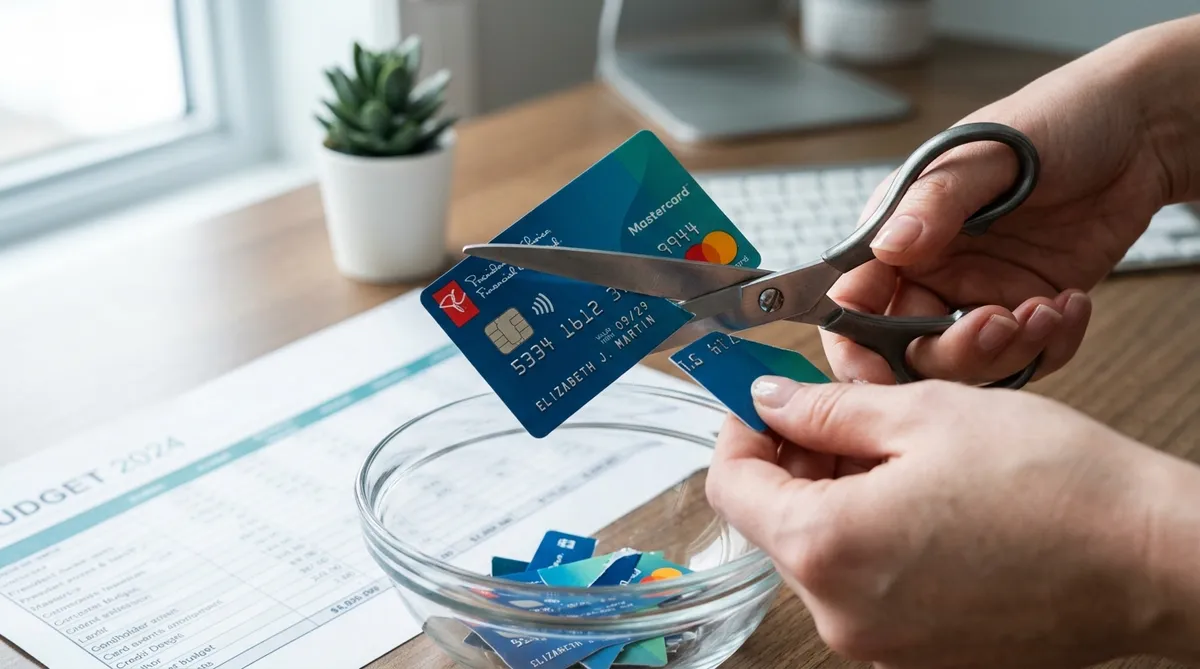
The trap is closing the cards after you pay them off. Don’t. I cover the math on that in Does Cancelling a Credit Card Hurt Your Score in Canada?. Short version: keep them open with zero balance.
What are your actual debt consolidation options in Canada?
Five real options exist for consolidating debt in Canada: a personal consolidation loan from a bank or credit union, a balance transfer credit card, a home equity line of credit (HELOC), a debt management plan (DMP) through a non-profit credit counsellor, or a consumer proposal filed by a Licensed Insolvency Trustee. Each one hits your credit differently and only one is legally insolvency.
Let me break them down with the actual rates I’m seeing as of February 2026.
Personal consolidation loan. Banks like RBC, TD, and Scotiabank typically offer rates between 9.99% and 14.99% if your score is above 660. Below 660 you’re looking at 18% to 28% from second-tier lenders like Fairstone or Easyfinancial. Credit unions (Desjardins in Quebec, Meridian in Ontario, Coast Capital in BC) often beat the big banks by 1 to 3 percentage points. Term is usually 36 to 60 months. Reports as installment debt. Neutral-to-positive once paid on time.
Balance transfer credit card. MBNA True Line, Scotiabank Value Visa, and CIBC Select Visa all run promotional rates between 0% and 3.99% for 6 to 12 months, with a transfer fee of 1% to 3%. Only useful if you can pay off the full balance before the promo ends; otherwise the rate jumps to 19.99% to 22.99%. Hard on utilization (the new card looks maxed) until you pay it down.
HELOC. Prime + 0.5% to Prime + 2% as of early 2026, so roughly 6.95% to 8.45%. Cheapest option if you own a home with equity. But you’re swapping unsecured debt for debt secured by your house. Miss payments and you risk your home, not just your score.
Debt management plan through a non-profit (Credit Counselling Society, Credit Canada). Not a loan. The counsellor negotiates lower interest with your creditors and you pay one consolidated monthly amount over 3 to 5 years. Reports an “R7” notation on your credit file, which counts as paying less than agreed. Score will drop 50 to 80 points and stay low until the plan ends, then 2 more years before it falls off.
Consumer proposal. Legally binding insolvency filing through a Licensed Insolvency Trustee. Settles debt for less than owed. Stays on your Equifax report for 3 years after completion. The score hit is severe (typically 100 to 200 points), but it’s the right tool when debt is over 40% of your annual income and you genuinely can’t repay in full. I cover the trade-offs in detail in Consumer Proposal vs Bankruptcy in Canada.
How long does it take to see credit score recovery after consolidation?
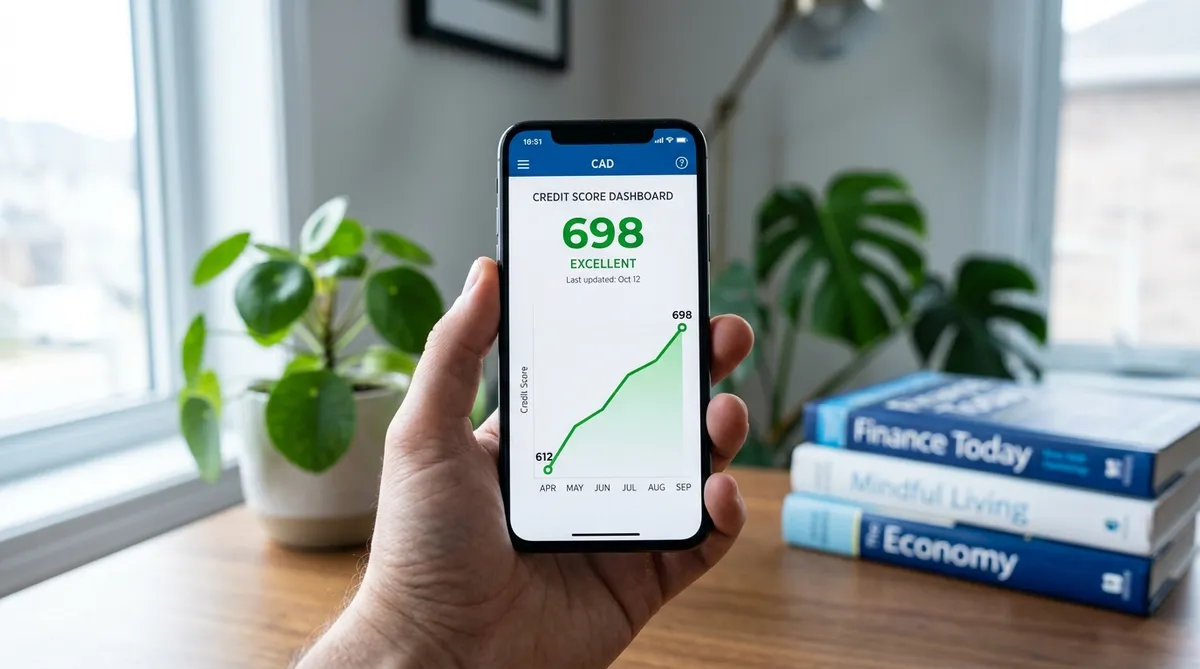
Most Canadians see their score return to baseline within 60 to 90 days after a consolidation loan, then climb 50 to 100 points above baseline by month 9 to 12 if utilization drops and payments are on time. Balance transfer cards recover faster (30 to 60 days) once paid down. DMPs and consumer proposals take 2 to 7 years to fully recover.
The recovery curve is not linear. You’ll usually see this pattern:
- Month 1: Score drops 20 to 40 points (hard inquiry + new account)
- Month 2-3: Score recovers 30 to 60 points as low utilization gets reported
- Month 6: Score is typically 30 to 50 points above where you started
- Month 12: Score can be 80 to 120 points above baseline if you’ve kept utilization under 10%
That month-2 jump is the surprising one. Most people brace for damage and don’t realize how heavily Canadian credit scoring weights revolving utilization. I wrote about why the standard advice is wrong in The 30% Utilization Rule Is Wrong (Here’s Why). For fast recovery you actually want to stay under 10%, not 30%.
What I’ve actually seen working in Canadian fintech
I’ll share something specific. In July 2023, when I got my first Canadian credit card, my score was 750. As of February 2026 it’s at 820. In between it dropped to the 650s twice. The biggest drop wasn’t from missing a payment. It was from a hard inquiry I didn’t see coming.
I was trying to finance a fridge through CitiBank Canada at 0% promotional financing. They sent the application, I waited three weeks, and they declined me. My score immediately fell 20 points from that single inquiry. No new account opened, no debt taken on, just the inquiry alone. That’s the same hit you’ll take applying for a consolidation loan, so don’t shop around at five different lenders. Pick one, apply, accept or decline.
The other thing I’ve watched at work: people who’ve gone through a bankruptcy or consumer proposal get pushed out of the mainstream banking system fast. The big banks don’t want them. They end up at payday lenders charging 391% APR or rent-to-own furniture stores at effective rates north of 60%. That’s how a $4,000 debt becomes $11,000 over two years. If you’re considering consolidation specifically to escape payday loans, read Escape the Payday Loan Trap and Rebuild Credit in Canada first. The right exit order matters.
I’ve also been on the other side of an application denial. When I was buying my house in Quebec, I tried to open a personal line of credit at one of the big five. They turned me down because I hadn’t been in Canada long enough — my file showed only about 14 months of credit history at that point, and most lenders want 24+ months for an unsecured line of credit. So if you’re an immigrant under two years in Canada, expect higher rates and smaller approval amounts on consolidation loans.
When should you skip consolidation and go straight to a consumer proposal?
If your total unsecured debt (credit cards, payday loans, unsecured lines of credit) exceeds 40% of your gross annual income, or your minimum monthly payments are more than 50% of your take-home pay, debt consolidation usually doesn’t fix the math. You’re moving the debt around, not reducing it. A consumer proposal through a Licensed Insolvency Trustee may settle the debt for 30 to 50 cents on the dollar.
The 40% rule is rough but useful. Someone earning $55,000 with $25,000 in credit card debt is probably consolidatable with a 5-year loan at 12% — payment around $556/month, manageable on most budgets. Someone earning $55,000 with $32,000 in credit card debt and a $400/month car loan is probably not. The consolidation loan payment alone would eat too much of their budget, and one missed payment puts them right back where they started, but now with a damaged installment account on file too.
A free consultation with a Licensed Insolvency Trustee costs nothing and they’re legally required to discuss all options including consolidation. Government of Canada lists registered LITs at ised-isde.canada.ca. If a “debt settlement company” charges upfront fees and isn’t an LIT, walk away.
How to apply for debt consolidation without tanking your score
Three rules. First, check your free credit report from Equifax Canada and TransUnion Canada before applying; dispute any errors first since errors alone can knock 20 to 60 points off and change your loan rate. Second, apply to one lender at a time, not five. Third, don’t close the old cards after you pay them off.
The pre-application checklist I give people:
- Pull free reports from both bureaus (Borrowell for Equifax, Credit Karma Canada for TransUnion)
- Dispute any errors using the free dispute letter template
- Calculate your debt-to-income ratio honestly
- Get a soft-quote pre-approval from your existing bank first (no hard inquiry)
- Only after pre-approval, submit the formal application
- Once funded, pay off the cards same day. Don’t let the loan sit in your chequing account
- Set up automatic payments on the loan for at least the minimum
- Keep the old cards open with $0 balance for at least 2 years
So is debt consolidation worth it for your credit in Canada?
For most people with credit scores above 600 and debt under 40% of annual income, yes. The short dip is real but small, and the recovery beats the alternative of carrying high-utilization cards for years. For scores below 600 or debt above 40% of income, consolidation often delays the inevitable. A consumer proposal hurts more upfront but ends faster.
The worst outcome is consolidating, then running the original cards back up to where they were. I’ve seen that happen more times than I’d like. Within 18 months, the person now has the consolidation loan plus the credit card debt back at full balance. If you don’t fix the spending pattern that caused the debt, no consolidation product in Canada will save you.
If you’re not sure where your situation falls, take our 90-second Recovery Quiz. It asks 10 questions about your income, debts, and credit score, then gives you a personalized plan with the consolidation method most likely to work for your specific case. It’s free and we don’t sell your data.
Sources: Office of the Superintendent of Bankruptcy Canada, Equifax Canada consumer guides, lender published rates as of February 2026.
Get Your Personalized Recovery Plan
Answer 6 quick questions and get a step-by-step plan tailored to your situation.
Take the Free Quiz Product manager in fintech, immigrant to Canada, and founder of Credit Score Hero. I moved from Kyrgyzstan to Montreal in 2022 and built this site to help Canadians navigate the credit system with free tools and honest, Canada-specific advice.