Authorized User Strategy: Boost Your Credit Score in Canada (2026)
How becoming an authorized user on a credit card works in Canada. Which banks report to Equifax and TransUnion, real score gains, and risks.

Product Manager in Fintech · Montreal, Canada
Ready to start recovering? Our free quiz creates a personalized plan for your exact situation.
Take the Free Quiz →Someone with great credit adds you to their credit card. You don’t spend a dollar. Within 30 to 60 days, their account history shows up on your Equifax Canada or TransUnion report. Your score climbs 30 to 80 points.
That’s the authorized user strategy. It’s free, it’s fast, and it works in Canada. But the Canadian version has quirks that American personal finance blogs don’t mention. Not every bank here reports authorized users to the bureaus. Some report to one bureau but not the other. And the rules keep shifting.
Here’s what I’ve confirmed as of April 2026.
What Is an Authorized User in Canada, and Why Does It Affect Your Score?
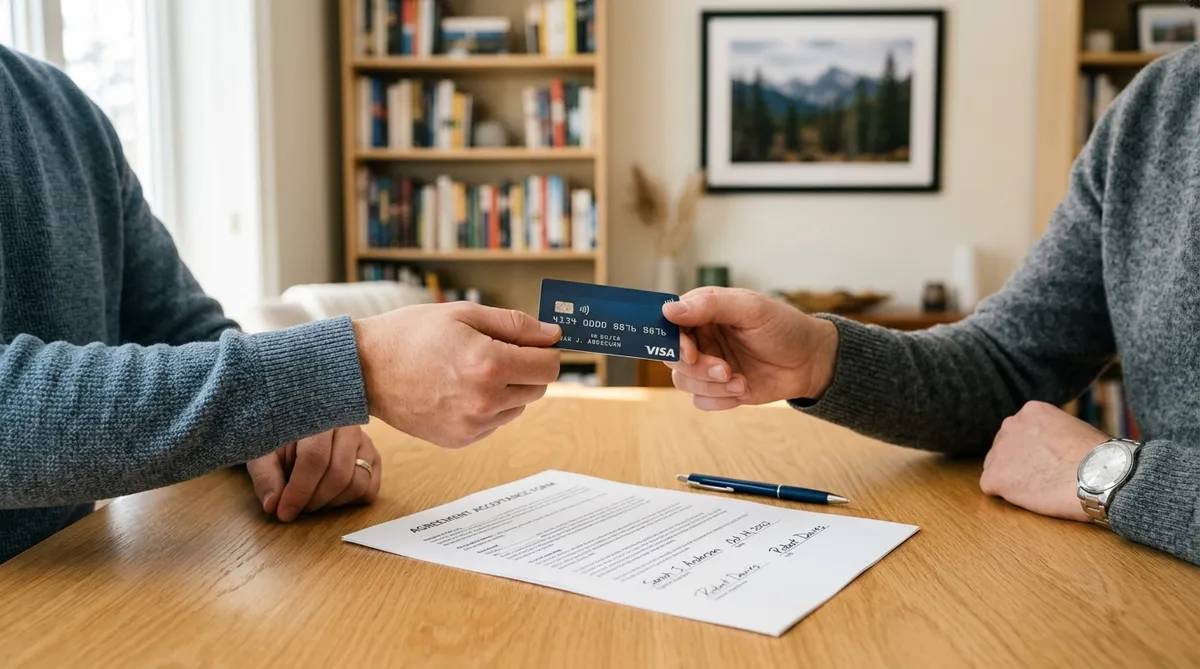
An authorized user is someone added to another person’s credit card who can make purchases but carries zero legal responsibility for the bill. The primary cardholder pays everything. You get a card with your name on it, and in many cases the full account appears on your credit file as if it were your own.
Why does this matter? Because Equifax Canada and TransUnion don’t distinguish between an account you opened yourself and one where you were added. If the primary cardholder has a $15,000 limit, 8 years of on-time payments, and 5% utilization, all of that shows up under your name. Your average age of accounts goes up. Your total available credit goes up. Your score follows.
But there’s a catch. In Canada, not all banks report authorized users to both bureaus. Some report only to Equifax. Some skip authorized users entirely. This is the single most important detail that separates this strategy from the version you’ll read about on American sites.

Which Canadian Banks Report Authorized Users to Credit Bureaus?
As of April 2026, here’s what I’ve been able to verify through direct experience, industry contacts, and reports from r/PersonalFinanceCanada. Banks change these policies without warning, so confirm with your issuer before relying on this.
Banks that report authorized users (Equifax and/or TransUnion):
- TD Canada Trust — reports to both Equifax and TransUnion. Consistently the most reliable for this strategy.
- RBC Royal Bank — reports to both bureaus in most cases.
- BMO — reports to both bureaus.
- CIBC — reports to Equifax. TransUnion reporting is inconsistent.
- Scotiabank — reports to Equifax. TransUnion results vary by card product.
- American Express Canada — reports to both bureaus. Amex has one of the best track records for authorized user reporting globally.
Banks with limited or no reporting:
- Tangerine — does not consistently report authorized users.
- Simplii Financial — limited reporting.
- Desjardins (Quebec) — inconsistent. Some cardholders report success, others see nothing on their file after months.
I want to be honest: this list isn’t perfectly reliable. I’ve seen posts on r/PersonalFinanceCanada where someone was added as an authorized user on a TD Visa and it appeared on Equifax within 45 days but never showed on TransUnion. Your results may differ.
How Many Points Will You Actually Gain?
The score impact depends entirely on the gap between your current credit profile and the account being added. No two situations produce the same result. But here are realistic ranges I’ve tracked across different scenarios.
Zero credit history (newcomers to Canada): An authorized user account with 5+ years of history and low utilization can push you from nothing to the 650-700 range within 60-90 days. This is where the strategy delivers the biggest payoff.
Score between 500 and 600: Expect a 30-60 point bump if the account has a long history, a high limit, and under 10% utilization.
Score above 700: Minimal impact. Maybe 10-20 points. Your own payment history and utilization ratio matter far more at this level than piggybacking.
One thing people get wrong: your score won’t match the primary cardholder’s score. You’re adding one positive account, not copying their entire credit profile. If you have a collection, a missed payment, or a consumer proposal on file, the authorized user account helps but won’t erase negative items.
What Are the Risks for Both Sides?
The risks aren’t equal. The authorized user has it easy. The primary cardholder takes on the real exposure.
For the authorized user: If the primary cardholder misses payments or maxes out the card after adding you, those negatives hit your report too. But you can fix this quickly. Ask to be removed and the account drops off your file within one to two billing cycles.
The bigger risk is dependence. If the relationship breaks down, they can remove you without notice and your score drops when that aged account disappears.
For the primary cardholder: They’re 100% liable for any charges you make. If they add an adult child who racks up $3,000 and can’t pay, the primary holder is responsible.
This is why many people do the strategy without giving the authorized user the physical card. The credit bureau benefit works identically whether you spend or not. Lots of people never activate the card they receive.
Good news: adding an authorized user does not trigger a hard inquiry and does not show as a new account on the primary holder’s report. Their score stays the same unless the authorized user changes the utilization ratio by spending.
My Experience Building Credit in Canada From Scratch
When I moved to Canada from Kyrgyzstan in 2022, I had zero Canadian credit history. Not bad credit. Nothing. The credit system back home works completely differently, and none of it carries over. I got my first credit card from CIBC and watched my score drop from 750 to 700 almost immediately. Nobody told me that a new account temporarily shortens your average account age and triggers a hard inquiry.
I work in a financial company now, and what surprised me most is that roughly 30-40% of Canadians have credit scores below 600. I’d assumed Canada was a wealthy country where everyone had solid credit. The reality? I see people who’ve been through bankruptcy get completely shut out by the Big Five banks. They can’t get a basic credit card from TD or RBC. They end up borrowing from payday lenders at 400%+ APR because no one else will approve them.
My score is about 820 as of February 2026. I got there by keeping utilization low on my Costco Mastercard, never missing a payment on my mortgage or car lease, and monitoring through Credit Karma Canada. But I learned about hard inquiries the painful way. When I bought my house, I tried to finance a refrigerator through Citibank. They ran the credit check, made me wait three weeks, then denied me. My score dropped 20 points for nothing. That’s the kind of mistake nobody warns you about until it’s too late.
How Does This Compare to Other Credit-Building Methods?
The authorized user strategy is free and fast. But it’s not always available. Not everyone has a family member willing to add them. Here’s an honest comparison with other options.
| Method | Cost | Time to See Results | Typical Score Gain | Credit Is Yours? |
|---|---|---|---|---|
| Authorized user | $0 | 30-60 days | 30-80 pts | No |
| Capital One Guaranteed Secured MC | $75 deposit + $59/yr | 3-6 months | 30-70 pts | Yes |
| Neo Secured Mastercard | $50 deposit, $0/yr | 3-6 months | 30-70 pts | Yes |
| KOHO Credit Builder | $7-$10/month | 3-6 months | 20-50 pts | Yes |
| Refresh Financial loan | ~$25/month | 6-12 months | 20-40 pts | Yes |
The authorized user approach wins on speed and cost every time. But a secured credit card builds credit that’s truly yours. My recommendation: do both. Get added as an authorized user for the quick boost while you open a secured card in your own name for long-term independence.
Should You Pay Someone to Add You as an Authorized User?
In the US, “tradeline selling” is a whole industry. People with excellent credit sell authorized user spots for $200 to $1,000 per tradeline. It exists in Canada too, but it’s a bad idea.
No Canadian law explicitly prohibits selling authorized user spots. But Equifax Canada and TransUnion have gotten better at detecting piggybacking tradelines from people with no real relationship to the primary cardholder. If they flag the account, it won’t count toward your score.
Don’t pay for this. The risk is terrible. You’re giving money to a stranger, trusting them to keep the account in good standing, and hoping the bureaus don’t catch on. If you don’t have a willing family member, a Capital One Guaranteed Secured Mastercard with a $75 deposit or a Neo Secured Mastercard with a $50 deposit gets you building credit independently for less money and zero risk of getting flagged.
Step-by-Step: How to Get Added as an Authorized User in Canada
1. Pick the right primary cardholder. You need someone who trusts you. Parent, spouse, sibling, close friend. The ideal account has at least 3 years of payment history (5+ is better), zero late payments, a credit limit above $5,000, and utilization under 10%. Make sure the bank reports authorized users (see the list above).
2. Have the primary cardholder call their bank. They’ll call the number on the back of their card and request to add an authorized user. The bank needs your full legal name and date of birth. Some ask for your SIN (Social Insurance Number) to match your credit bureau file.
3. Wait 30-60 days. Most Canadian banks report to the bureaus once per statement cycle. Check Borrowell for Equifax or Credit Karma Canada for TransUnion to see when the account appears.
4. You don’t need to use the card. The credit benefit comes from the account appearing on your report, not from making purchases. Many people never activate the card. If the primary cardholder is nervous about you spending, they can keep the card themselves or ask the bank about setting a $0 limit for the authorized user.
Who Should Use This Strategy?
Good candidates:
- Newcomers to Canada with no credit history at all
- Young adults (18+) whose parents want to give them a head start
- People recovering from bankruptcy or a consumer proposal who need a quick initial boost
- Anyone who needs a fast score improvement for a mortgage application or rental approval
Skip it if:
- Your score is already above 700 (minimal benefit)
- You don’t have access to a willing primary cardholder
- You want complete independence in your credit building
What Happens When You’re Removed?
When the primary cardholder removes you or closes the account, the tradeline typically falls off your report within one to two billing cycles. Your score adjusts.
If that account was your oldest tradeline, your average age of accounts drops. If it was your highest-limit account, your total available credit drops. Both can lower your score, sometimes by a lot.
This is why the authorized user strategy should be a bridge, not a foundation. Build your own credit at the same time so that when you’re eventually removed, your score doesn’t collapse.
Not sure which credit-building strategy fits your situation? Take our free 90-second recovery quiz to get a personalized plan based on your actual score and goals.
Get Your Personalized Recovery Plan
Answer 6 quick questions and get a step-by-step plan tailored to your situation.
Take the Free Quiz Product manager in fintech, immigrant to Canada, and founder of Credit Score Hero. I moved from Kyrgyzstan to Montreal in 2022 and built this site to help Canadians navigate the credit system with free tools and honest, Canada-specific advice.